

Door-to-Door Distribution Rules: A Local Guide for Leaflet Campaigns
Door-to-door distribution has a simple appeal: put a leaflet into the right hands, in the right streets, at the right time. The hard part is rarely the printing. It is the local work around it — knowing where you may distribute, which doors to skip, how to walk a neighborhood without wasting time, and how to show afterwards that the campaign was handled properly. Get those details right and a modest drop can feel more effective than a much larger, scattergun one.
Know the local ground rules before the first bundle
Before anyone lifts a bundle, check what applies in your area. Rules for commercial leafleting can differ between council areas, town centers, parks, stations, housing estates and private roads. Some local authorities ask for prior permission or have restrictions in particular zones; others expect sensible behavior and a contactable organiser. A quick call to the council’s environmental services or licensing team is rarely wasted. Explain the dates, streets and volume, and ask whether there is anything you need to know. Keep a note of who you spoke to and what they said.
Private land needs its own check. Gated developments, managed apartment blocks and business parks may have their own arrangements. Ask the managing agent or building manager before delivering. If you cannot get a clear answer, leave that property out. It is better to miss a few doors than to create a complaint. For anything that feels like a legal question, take proper local advice rather than relying on a rumor from a previous campaign.
Write a one-page campaign brief: area, dates, distributor names, a mobile contact, the stop list, and any permission references. Give a copy to everyone involved. It makes a small operation look organised and gives distributors something to fall back on if a resident or site manager asks who they are.
Respect no-leaflet signs and opt-outs without debate
A no-leaflet sign is not an obstacle to work around. It is an instruction. Distributors should skip any door displaying a sticker, a handwritten note, a building notice or a clear verbal request. That includes messages such as “no junk mail”, “no leaflets” and “no free papers”. Do not tuck a leaflet into the gate, leave it on a doorstep, or push it through a gap beside the letterbox. If the signal is ambiguous — a faded sticker, for example — skip the property and note it. One skipped door is cheaper than an annoyed resident telling the neighborhood you ignored their wishes.
What counts as a clear signal?
- A sticker or sign on the letterbox, door or porch.
- A handwritten note asking for no leaflets or free papers.
- A notice in a shared lobby or building entrance.
- A direct request from a resident, even if there is no sign.
- A building manager’s instruction covering the whole property.
Brief the team on doorstep etiquette too. Do not ring bells unless the campaign includes conversations. Do not enter private halls or porches. Keep gates as you found them, avoid blocking paths, and move on politely if someone challenges you. A leaflet campaign is a small public act; the way distributors behave is part of the message.
Target neighborhoods in manageable loops
A common mistake is to order a large print run and then try to cover the whole town. It is slower, harder to supervise and much harder to record. Start with a defined area. Think about who the leaflet is for and which streets are likely to contain them, then draw loops you can finish in 60 to 90 minutes. A loop should have a clear start and finish, ideally near public transport, parking or a café where distributors can regroup.
Use local knowledge and a simple map. Note long private drives, steep hills, locked gates, busy roads and streets where letterboxes are hard to reach. Those details change how long a round takes. If you are distributing for a local service, schools, community events or a shop, choose nearby streets first; if the offer is broader, test two or three contrasting areas rather than blanketing one. Check the weather and the time of day. Weekday afternoons and Saturday mornings often work well for residential drops, but busy shopping streets have their own rhythms.
Build a route sheet that survives the round
List street names, odd and even sides, the number of doors, and any notes such as “skip numbers 12–18: no leaflets” or “block entrance: ask manager”. Count leaflets into bundles and add a small number of spares. Mark off streets as they are completed. A route sheet is not bureaucracy; it stops two people covering the same cul-de-sac and shows where a second visit is needed.
Keep a record that is useful, not decorative
Good records protect the campaign and improve the next one. Keep a simple log for each session: date, time, area, streets covered, number of leaflets distributed, distributor name, and notes on refusals, signs, locked gates, dogs or building managers. A paper sheet on a clipboard is fine; a shared spreadsheet is better if several people are involved. The point is to answer a question later and to avoid repeatedly leafleting homes that have asked not to receive material.
Keep opt-out details minimal and secure. You do not need to build profiles of residents. Record the address and the request, store it safely, and delete it when it is no longer needed for the campaign. If you are handling personal data at any scale, check your obligations under local data protection rules or take professional advice.
A five-minute end-of-round check
- Count leftover leaflets and reconcile them with the bundle.
- Sign and date the route sheet.
- Add any new no-leaflet addresses to the stop list.
- Note streets that were inaccessible or unfinished.
- Pass problems to the campaign organiser the same day.
Keep the records for the campaign period and for a reasonable time afterwards. If a complaint arrives, a clear log is far more useful than memory.
Work with buildings, businesses and busy streets
Apartment blocks and business premises need a different approach. Ask before leaving a stack in a lobby, and never prop open a security door or leave leaflets loose in a communal hallway. Fire safety and nuisance rules matter more than a few extra deliveries. If a building has a notice board, ask whether a single copy can be displayed instead. For shops, cafés and offices, visit at a quiet time, ask for the manager and leave one copy rather than a pile. A polite request often works better than a silent drop.
On busy streets, keep pavements clear and do not stand in doorways. If you are distributing near a market, station or event, check whether the site has its own rules. And respect “no cold callers” signs on business doors in the same way you would respect a household no-leaflet sticker.
Safety, weather and common-sense logistics
Brief distributors on the basics: do not enter homes, avoid aggressive dogs, carry a phone, tell someone the route, and wear something visible if you are out at dusk. Do not distribute alone in unfamiliar areas after dark. Keep leaflets in a shoulder bag or small backpack rather than a heavy box; you will move faster and trip less. In rain or wind, stop or switch to covered streets, because soggy leaflets create litter and waste. Carry water, and plan a meeting point. If someone challenges the campaign, stay calm, give the organiser’s contact details and leave.
Small logistics decide whether a round feels professional. Park legally, keep bundles tidy, and take away empty boxes. Do not leave leaflets on cars, benches or walls. A leaflet that becomes street litter damages the campaign before anyone reads it.
Before the next drop: a short practical closing
Run a final check before launch: confirm local permissions, prepare the no-leaflet stop list, map the loops, brief the team, print route sheets and decide where records will be stored. After the drop, review the logs, refine the routes and thank the people who walked them. Door-to-door distribution is still a human activity. One leaflet in the right letterbox, delivered with permission and a little care, is worth far more than a hundred pushed through the wrong doors.
For specific legal or data protection questions, seek advice from your local council or a qualified professional.
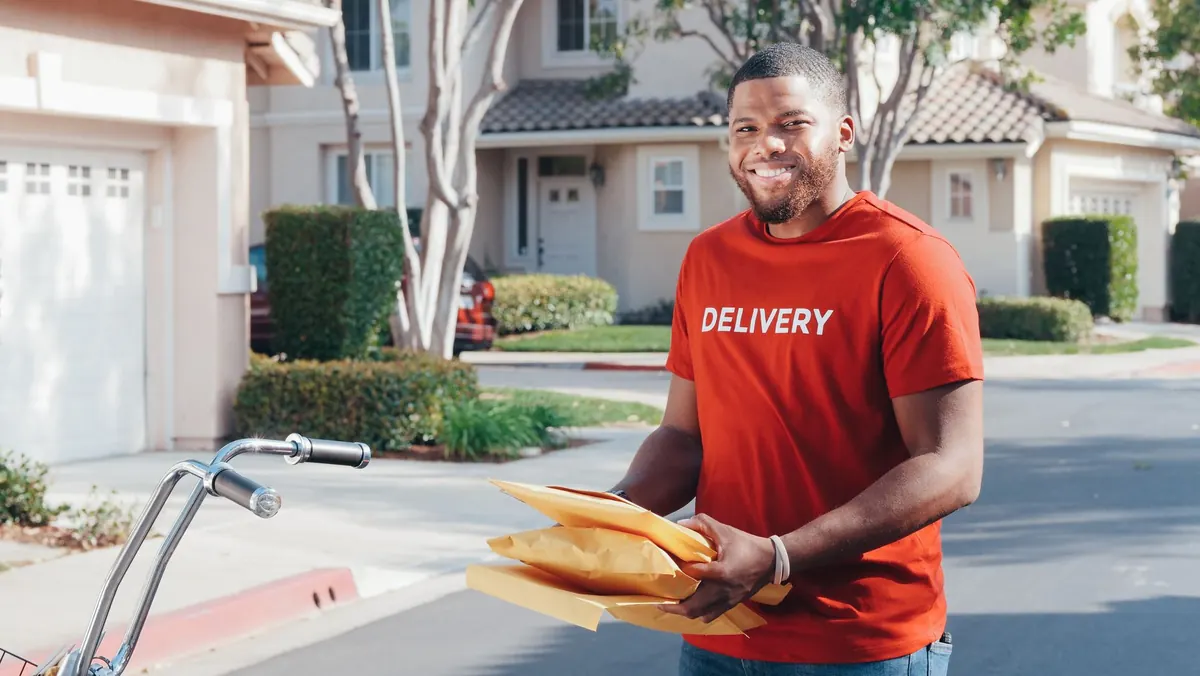
Photo: Jan van der Wolf / Pexels