
Leaflet vs Flyer: Key Differences and When to Use Each
A quote comes back from the printer and somewhere between "leaflet" and "flyer" the price moves, the paper changes, and the person on the phone asks which one you actually want. It is a fair question, and most people answer it badly, because the two words get used as if they mean the same thing.
They do not, quite. The difference is not academic — it decides how much you can say, where your piece can go, how it survives being handled, and whether the fold cracks or holds. Get it right at the start and the rest of the job gets easier.
The words themselves are messier than the objects
In British English, "leaflet" is the broad term for almost any single-sheet printed handout, folded or flat. In American English, "flyer" does most of that work. So a good share of the confusion is regional vocabulary rather than anything physical.
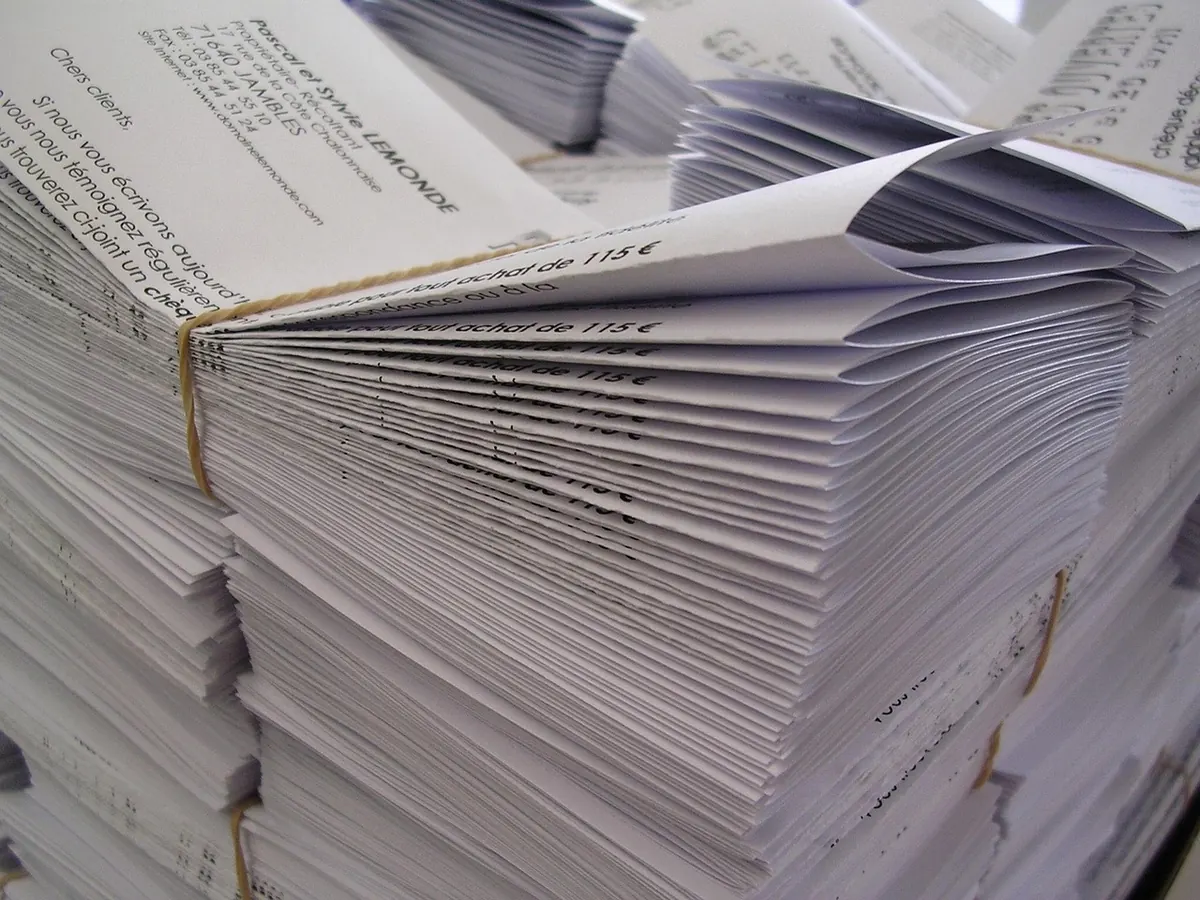
In print shops and among designers, though, the words have drifted into a useful division. A flyer is usually a single unfolded sheet, printed on one or both sides. A leaflet is usually folded, often into two or three panels, and is designed to be opened rather than glanced at. Plenty of printers will happily quote either word for the same job, so do not treat this as law. Treat it as the working distinction that will get you the object you pictured.
Size and shape: where the real difference sits
Flat sheet sizes are shared between the two formats. A5, A4, DL and the occasional square are the usual suspects for both. What separates them is the finished size — the dimensions of the thing in someone's hand.
An A4 flyer is 210 × 297 mm and stays that size. It is read top to bottom in one sweep. An A4 sheet folded in three becomes a DL leaflet, roughly 99 × 210 mm: narrow enough for a pocket, a leaflet rack, or a standard envelope. Same starting sheet, very different object at the end.
Paper weight follows the format. Flyers are often run on 130–170 gsm, heavy enough to feel deliberate but light enough to be cheap in volume. Leaflets get handled and folded, so 100–130 gsm uncoated stock folds cleanly and stays flat. Heavier coated stock looks luxurious and then cracks along the fold, unless the printer scores it first. Ask about scoring before you fall in love with a 250 gsm silk.
Folding changes what you are able to say
A fold is not decoration. It creates panels, and panels create sequence, privacy and a small amount of ceremony.
The common options on an A4 sheet:
- Half fold — one crease, four panels, opens like a card. Simple and reliable.
- Tri-fold (letter or roll fold) — six panels. The panel that tucks inside should be 2–3 mm narrower, otherwise the leaflet buckles when closed.
- Z-fold — six panels that read like an accordion, good for a numbered sequence or a short set of steps.
- Gate fold — two panels folding inward to meet in the middle, which gives you a reveal. Nice for a premium service; fiddly for volunteers stuffing envelopes.
Folding lets you build a reading order: cover, then open, then the detail, then the contact block on the back. A flyer has no inside. Everything competes on one surface, which is a constraint and also a discipline.
Purpose: broadcast or explain
A flyer announces one thing. A gig, an opening, a sale, a room to rent, a lost cat, a new menu. It has to work at arm's length, read in about three seconds, from a pinboard or a shop window or a windscreen. One headline, one image, one action. If you find yourself adding a second message, you probably need a leaflet instead.
A leaflet has room to persuade. It suits services, price lists, opening times, visitor information, care instructions, a small product range, a map. People pick it up intending to read it, or at least to keep it near the kettle for a week. More text is acceptable because the format promises more text.
The practical test: count your words. Under about 100 and a flyer is comfortable. Over 150 and you are designing a leaflet whether you call it one or not. Between the two, use your judgement — a strong image and a short list of dates will still work on a flat sheet.
Distribution decides more than design does
Where the piece has to survive is often the tie-breaker.
Flyers belong on counters, noticeboards, tables at events, in letterboxes during a door-drop, and in the hands of someone standing outside a venue. They are cheap enough to be disposable, which is exactly the point for a one-day event. Check local rules before you staple anything to a lamp post or tuck it under a windscreen wiper; some councils treat that as littering, and enforcement varies by area.
Leaflets belong in racks, reception areas, tourist information points, welcome packs, envelopes and magazine inserts. A folded leaflet handed to someone feels more substantial than a loose sheet and is far less likely to hit the nearest bin on the way out. If you plan to post them, remember that folded self-mailers usually need tabbing or gluing to travel safely through sorting machinery — ask your postal service what it requires rather than guessing.
What to ask before you sign off
Both formats are cheap to print digitally in short runs, and cheaper still in offset at volume. Folding adds a separate production step, so it costs time as well as money, and it cannot be fixed after the fact. A flat sheet with a typo can be reprinted in an afternoon; a thousand tri-folds with the panels in the wrong order cannot.
- What is the flat size and what is the finished size?
- Which fold, and which panel is the front cover?
- Does this stock need scoring to fold cleanly?
- Is the file set up with bleed and safe margins for the fold positions?
- Can I see a blank folded dummy before the full run?
That last one is worth insisting on. A blank dummy costs almost nothing and shows you exactly what a tri-fold feels like in the hand — where the cover lands, which panel ends up hidden, and whether the whole thing closes flat.
A simple way to choose
- Count your content. One message and an address: flyer. Several sections with detail: leaflet.
- Name the single action. If there is one call to action, a flyer will carry it. If you need to explain and then persuade, fold it.
- Picture the moment of contact. Glanced at from two metres: flyer. Picked up and kept: leaflet.
- Decide how long it must last. A weekend promotion can be a flyer. A price list that lives in a drawer for six months should be a leaflet.
- Check the budget for folding. If the fold is not affordable this time, print an A5 flyer rather than crowding an A4 one.
If you are still torn, default to an A5 flyer — it is the safest, most versatile piece in the drawer and it fits a leaflet rack as well as a pinboard. Move up to a folded A4 leaflet when you genuinely have more to say than a single sheet can hold, and when someone has agreed to spend more than a few seconds with what you made. The format should follow the reading, not the other way round.
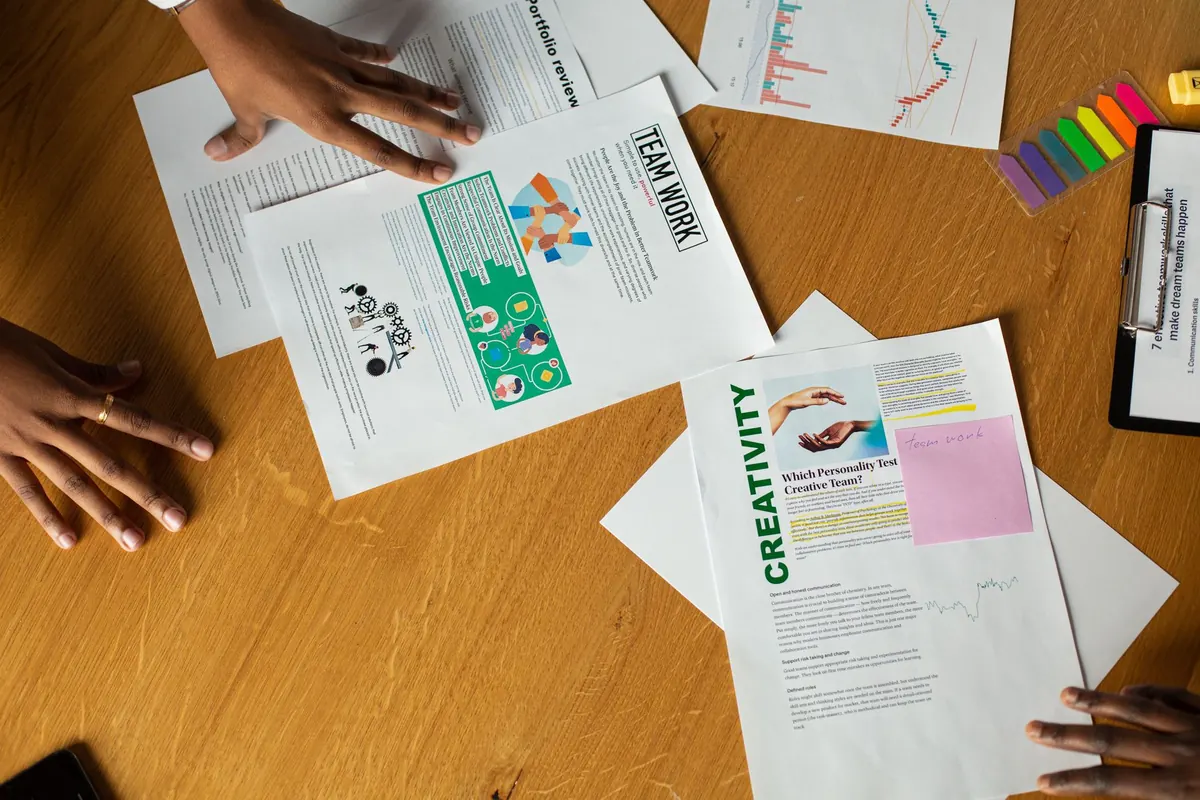
Photo: Monstera Production / Pexels