

Your First Leaflet Campaign: A Beginner's Guide from Concept to Doorstep
A leaflet campaign is one of the few kinds of advertising you can hold in your hands, drop through a letterbox and count. There's no auction to bid in, no algorithm to please, no monthly retainer. There is a box of paper, a map, and a decision about which doors to knock on.
That simplicity is also where first attempts go wrong. Most disappointing leaflet campaigns don't fail at the design stage. They fail because nobody decided what the leaflet was supposed to achieve, how many were needed, or who was going to walk the streets with them. Sort those three things out before you approve a proof and the rest gets much easier.
Start with the goal, not the artwork
Before you think about paper stock or a headline, finish this sentence: "This campaign works if, by the end of it, we have ______." The blank needs a number and a deadline. Twenty new enquiries in four weeks. Forty people booked onto an open day. Sixty people through the door on a quiet Tuesday.
Two kinds of goal behave very differently. A response goal asks for action now: call, book, scan, come in. An awareness goal asks people to remember you exist, so that when the boiler breaks in February your name is the one they find. Response campaigns want urgency, a clear offer and tight geography. Awareness campaigns can afford to be quieter, broader and repeated over months.
A plumber leafleting three streets wants the phone to ring this week. A bakery two doors from a school wants parents to know it opens at seven. Same format, completely different leaflet. Write your goal on a sticky note and put it where you'll see it while designing. If a design choice doesn't serve the goal, it's decoration.
Choose an audience you can physically reach
Leaflets are a geographic medium, and that's a strength. You don't need to guess who might be interested in the abstract; you need to decide which streets are worth your Sunday morning. For most small businesses the answer is a radius around the premises, or a set of streets where your existing customers already live.
Push past the obvious, though. A ten-minute walk in each direction might contain three quite different audiences: terraced streets with young families, a cluster of flats with a shared entrance, and a business park that empties at six. They don't all want the same message, and you don't have to treat them the same.
Walk the area before you print
Take an hour and a notebook. Count the doors. Note the blocks of flats with entry phones you can't get past without a key. Note the houses with a "no junk mail" sign on the door, which you should always respect, and the ones with a dog behind a low gate. Note where the busy corner shops are, because that's where people will actually pick up a leaflet from a counter.
That walk tells you two useful things: how many homes are realistically reachable, and whether your area is better served by door drops or by hand-to-hand distribution. Doing it before you order print saves you from a spare bedroom full of paper you can't place.
Work out your print quantity properly
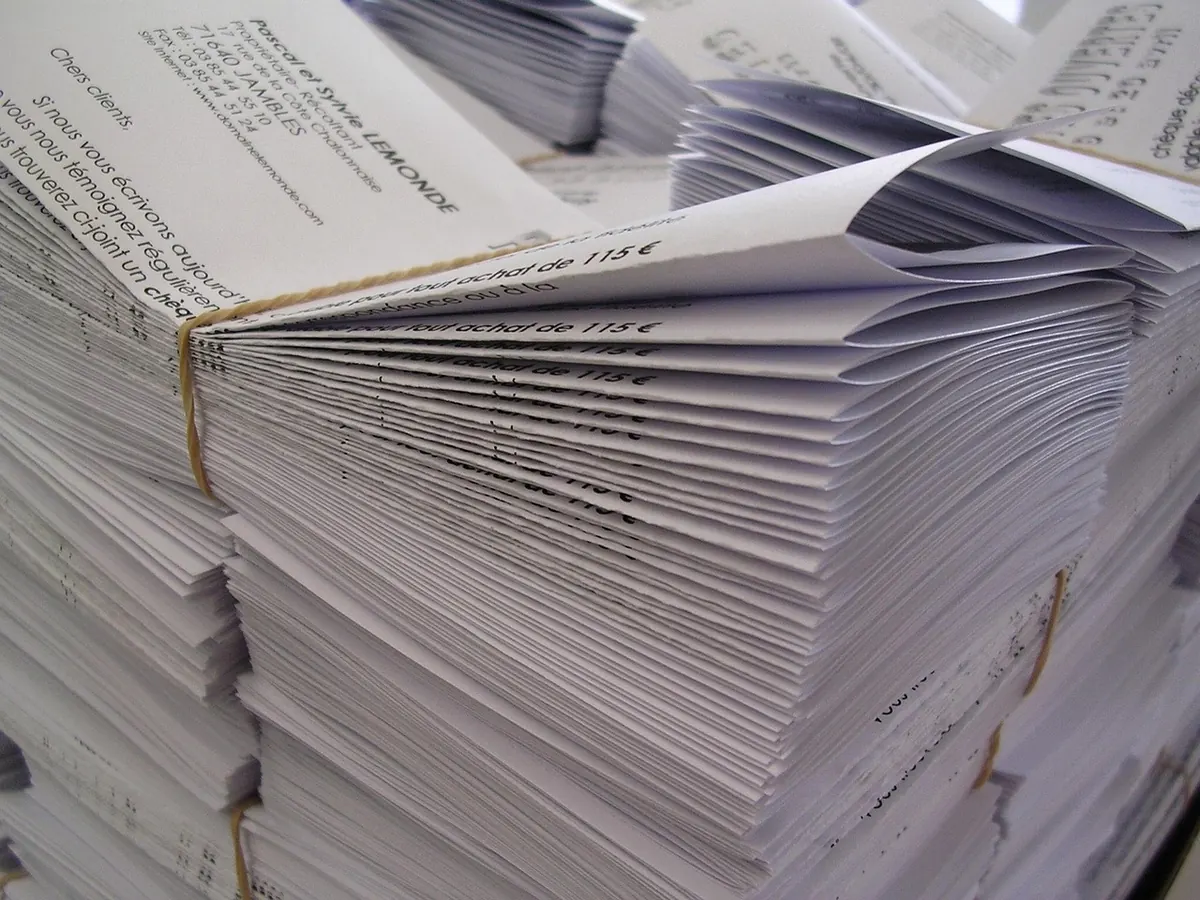
Quantity is where beginners either undershoot and run out mid-street, or over-order and lose the will to deliver. The fix is to calculate from the ground up rather than guessing at a round number.
- Count the doors. Use your walk, or a map tool, to get a realistic number of reachable households in your chosen area.
- Subtract the unreachable. Entry-phone blocks, no-junk-mail doors and empty properties all come off the total.
- Decide how many times you'll hit each home. Two rounds of the same streets usually beats one round of twice the area, because a single leaflet is easy to ignore.
- Add roughly 10% for spoilage. Rain, damaged corners, a batch you left on a bus. It happens.
- Keep a stack for everywhere else. Counters, noticeboards, events, the window of a friendly café. Fifty to a hundred usually covers it.
One honest word about expectations. Door drops convert at low rates. A leaflet through a thousand doors that produces a handful of enquiries is within the normal range, not a failure. Plan for reach and repetition, not for a dramatic percentage, and you won't panic halfway through the first street.
Print pricing usually drops per unit as the run gets bigger, which tempts people into ordering three times what they need. The saving is real but the waste is worse. Delivering 1,500 leaflets twice will teach you more than 5,000 sitting in a cupboard.
Pick a distribution method that fits your week
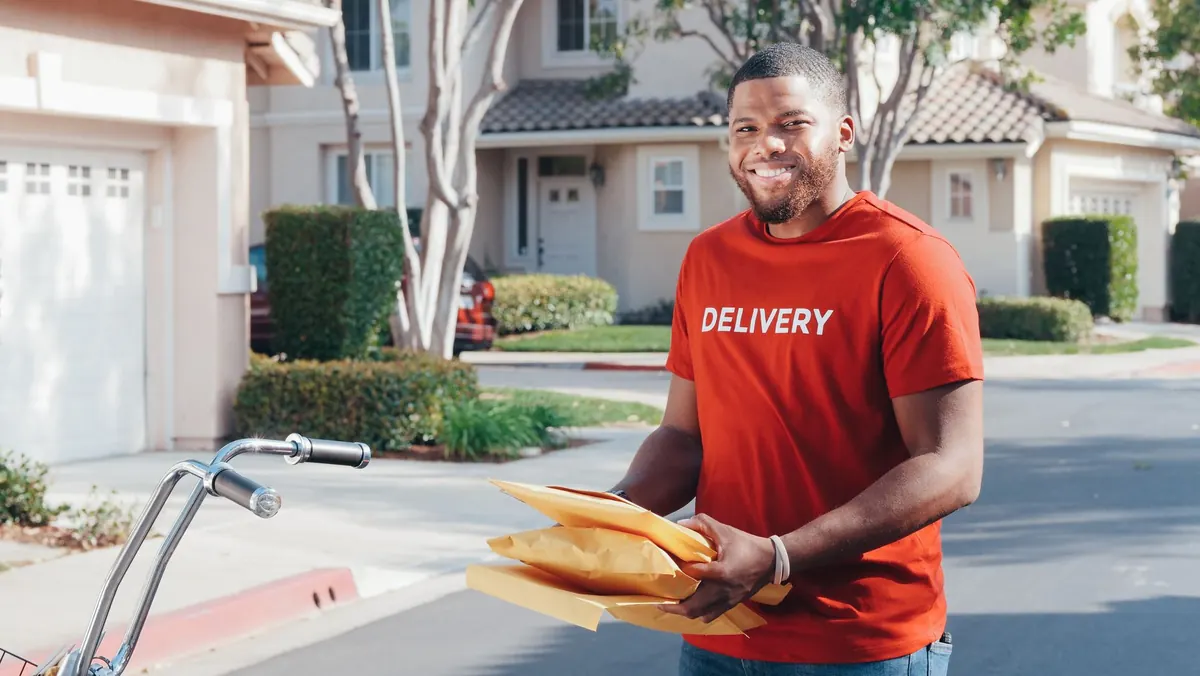
Delivering it yourself
The cheapest and most informative option, especially for a first campaign. You learn which doors are behind gates, which streets feel dead at 3pm and which blocks are worth revisiting. Budget around an hour per hundred homes if you're being thorough. Go in the early evening or on a Saturday when people are home, and remember that a leaflet through a door is read on the doormat in about four seconds, so the top half of your design is doing most of the work.
Using a shared distribution or door-drop service
Paid distribution gets your leaflet into a wider area than you could walk yourself, often alongside other advertisers' material. Ask exactly which postcodes or sectors are covered, how many drops per area, whether they'll deliver to flats and businesses, and when the round happens. Get the area list in writing. If a company can't tell you which streets you're paying for, look elsewhere.
Handing them out and leaving them behind
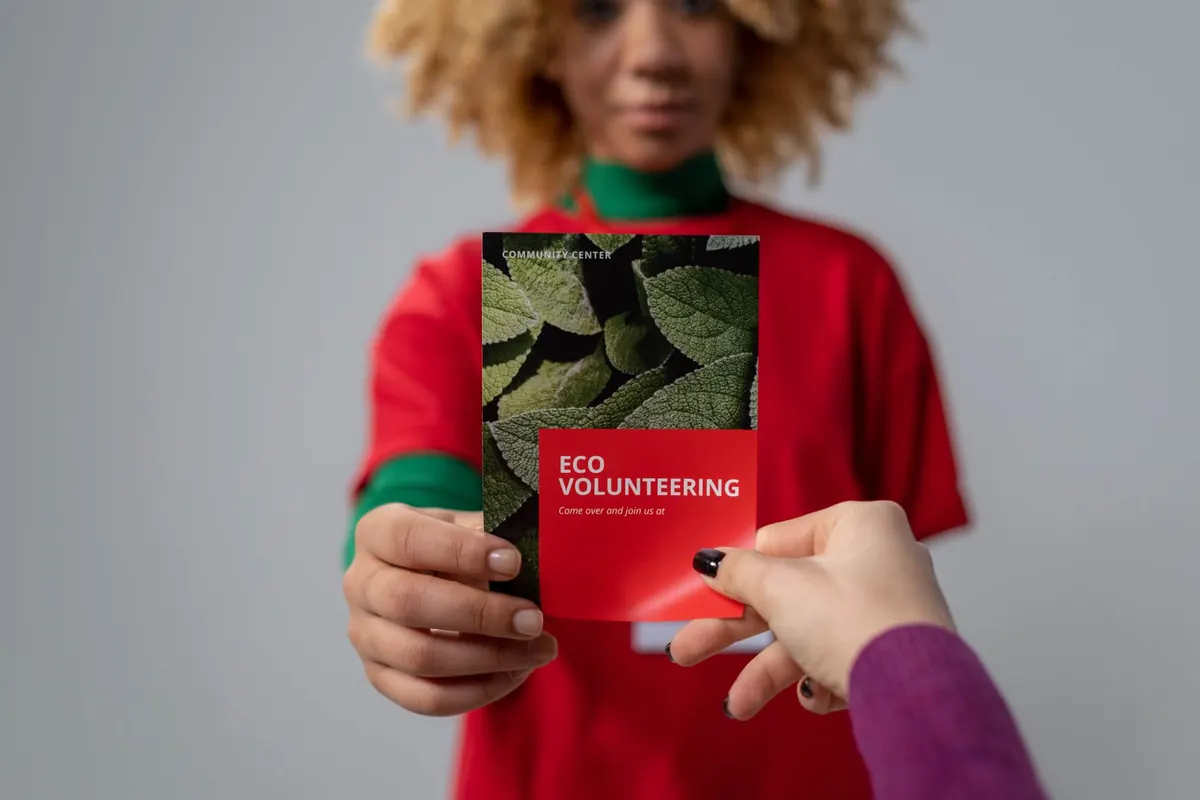
Face-to-face handing at a station, a market or outside an event gets a far higher pickup rate than a letterbox, because you can say a sentence along with it. Do it on private land only with permission, and check with the local authority if you're unsure about public spaces. The quieter option is the counter stack: a friendly shop, a library noticeboard, a café by the door. Always ask first, and offer to collect what's left.
Make the leaflet work on the doorstep
A leaflet has one job in the first two seconds: tell someone what this is and why it matters to them. That means one clear message, a headline you could read from a metre away, and a phone number or address that's genuinely easy to find. If you have an offer, put the offer front and centre with a date on it.
Keep the back for the details: opening hours, a small map, a short list of what you do. Use a QR code if you have a page worth sending people to, but keep a plain website address and a phone number for everyone who won't scan. Choose a slightly heavier paper if the leaflet will be handled or posted on a board; A5 and DL both go through a standard letterbox without folding. And check the phone number three times, because a wrong digit undoes a fortnight of walking.
Keep a simple record of what happened
You don't need analytics software. You need a notebook and a habit. Write down which streets went out on which dates. Ask every new customer how they heard about you, and mark the answer on a tally sheet by the till or in your inbox. If you have a website, give the leaflet its own page so visits are traceable.
Give it two to three weeks before deciding whether it worked. Leaflets sit on kitchen tables; some people act the same day, plenty act a fortnight later when they finally need what you sell.
Your first campaign, in order
- Write the goal as a number and a date.
- Choose two or three streets or one postcode sector, and walk them.
- Count reachable doors, decide on two drops, add 10% and a stack of spares.
- Design for the four-second glance, then proofread the contact details twice.
- Deliver, record the streets and dates, and ask every new customer how they found you.
Run it once, look at what came back, and then do it again with one change: a different street, a sharper offer, a better opening line. That's how a first leaflet campaign turns into a distribution habit you can rely on.
Photo: cottonbro studio / Pexels